When organizing a corporate gala, a sports tournament, or a milestone anniversary, one of the most critical budgetary considerations is the custom trophy cost. A trophy is more than just a piece of acrylic or metal; it is a physical manifestation of achievement, recognition, and prestige. Understanding the financial drivers behind these awards allows organizations to balance the desire for high-end aesthetics with practical fiscal constraints.
In the global manufacturing landscape, the pricing of recognition awards has evolved significantly. With the integration of CNC machining, 3D printing, and sustainable materials, the spectrum of custom trophy cost has widened, offering options from budget-friendly commemorative plaques to ultra-luxury bespoke sculptures. For procurement managers and event planners, navigating these options requires a deep dive into material science and production scalability.
Ultimately, optimizing your investment in custom awards means maximizing the perceived value for the recipient while maintaining a sustainable cost structure. By analyzing the variables that influence custom trophy cost, businesses can create lasting symbols of success that inspire loyalty and motivate excellence without overextending their marketing or operational budgets.
Material Selection and its Impact on Custom Trophy Cost
The primary driver of the custom trophy cost is the raw material chosen for the build. Traditional options like acrylic and resin provide a cost-effective entry point, offering versatility in color and shape while keeping the unit price low. In contrast, high-end materials such as K9 crystal, optical glass, or precious metals significantly elevate the price point due to the inherent cost of the raw materials and the specialized tools required to carve them.
Beyond the raw cost, materials affect the manufacturing process. For instance, working with metal requires casting or CNC milling, which adds labor hours compared to the heat-bending processes used for plastics. Choosing a hybrid approach—combining a heavy base of marble with a lightweight acrylic topper—is a common industry strategy to maintain a premium feel while optimizing the overall custom trophy cost.
Design Complexity and Engineering Labor
Design intricacy plays a pivotal role in determining the final custom trophy cost. A simple geometric pillar is relatively inexpensive to produce because it utilizes standard cutting paths and requires minimal setup time. However, when a client requests an organic, bespoke shape—such as a detailed architectural replica or a fluid abstract sculpture—the engineering labor increases. Designers must create complex 3D models, and technicians must perform multiple iterations to ensure structural integrity.
Furthermore, the method of fabrication varies by design. 3D printing allows for immense complexity without the need for expensive molds, which can lower the cost for one-off "hero" trophies. Conversely, if the design requires a custom-cast mold, the initial "tooling cost" is high, though this cost is amortized over larger quantities. The balance between creative ambition and production feasibility is where most budget negotiations occur.
Ultimately, the more unique the silhouette and the tighter the tolerances required, the higher the labor cost. Professional designers often suggest "modular" designs—where a standard base is paired with a custom top—to reduce the engineering burden and lower the total custom trophy cost without sacrificing the visual impact of the award.
Production Volume and Economies of Scale
In the world of manufacturing, volume is the most effective lever for reducing the per-unit custom trophy cost. When producing a single custom piece, the manufacturer must account for the full cost of design setup, material sourcing, and machine calibration. These "fixed costs" make single-unit orders disproportionately expensive.
As the order quantity increases from 10 to 100 or 1,000 units, the custom trophy cost drops precipitously. This is due to economies of scale: bulk material purchasing reduces the price per kilogram, and the setup time for machines is spread across hundreds of items. For example, laser engraving 500 identical logos takes only marginally longer than engraving 50, drastically lowering the labor cost per unit.
Strategic procurement involves forecasting needs to hit these "price breaks." Organizations that order their annual awards in a single batch rather than sporadically throughout the year often see a 20-40% reduction in their average custom trophy cost.
Customization Techniques and Branding Costs
The method used to apply branding and personalization is a nuanced variable in the custom trophy cost equation. Surface-level printing, such as UV printing, is fast and allows for full-color gradients, making it a cost-effective choice for vibrant logos. However, for a more prestigious look, deep-etching or sandblasting is preferred. These processes remove material from the trophy, creating a tactile depth that suggests permanence and quality, though they require more processing time.
Additionally, the level of individualization matters. A trophy with a generic "Employee of the Month" label is cheaper than one where every single piece has a unique name and date engraved. Variable data engraving requires more careful quality control and individual setup, which adds a premium to the custom trophy cost.
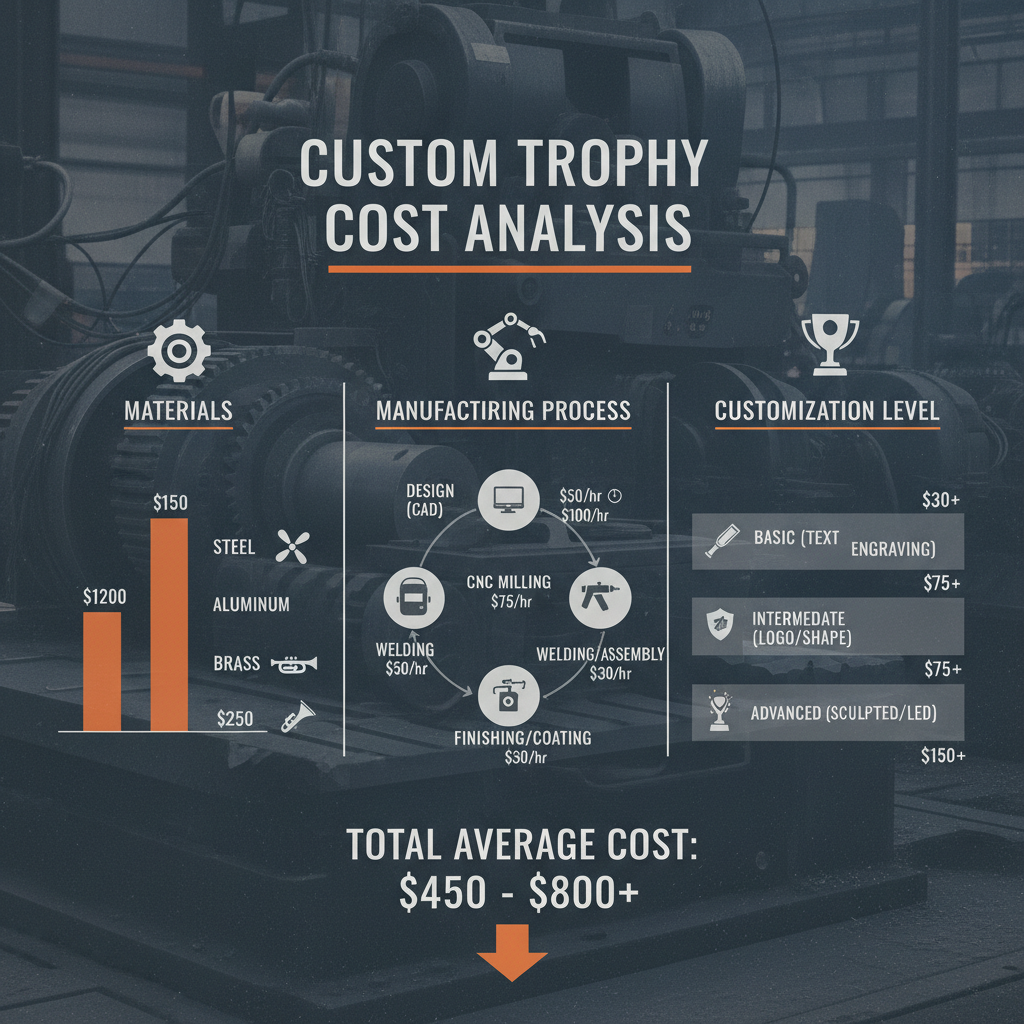
Cost Impact Analysis of Various Customization Methods
Global Logistics and Packaging Considerations
Often overlooked in the initial quote, shipping and packaging can significantly inflate the final custom trophy cost. High-quality trophies are typically heavy and fragile, necessitating specialized protective packaging. Custom-fitted foam inserts and double-walled corrugated boxes are essential to prevent breakage during international transit, but these materials add to the overall expense.
Furthermore, the geographical distance between the manufacturer and the end client impacts the budget. Air freight is fast but expensive, whereas sea freight is economical for large volumes but requires longer lead times. When calculating the total custom trophy cost, it is vital to consider "landed cost"—the sum of production, insurance, customs duties, and final delivery—to avoid unexpected budget overruns.
Quality Assurance and Material Certification
The difference between a "good" trophy and a "world-class" award often lies in the quality control (QC) phase, which directly influences the custom trophy cost. Rigorous QC involves inspecting every piece for air bubbles in the resin, scratches in the crystal, or misalignment in the engraving. For high-stakes awards, manufacturers implement 100% inspection rates rather than batch sampling, increasing the labor cost.
Moreover, certification adds a layer of value and cost. Using certified recycled acrylics or ethically sourced metals may carry a premium price tag. However, these "green" materials are increasingly demanded by global corporations aiming to meet ESG (Environmental, Social, and Governance) goals. Investing in certified materials may raise the immediate custom trophy cost but enhances the brand's reputation for sustainability.
Finally, the longevity of the award depends on the grade of materials used. Low-cost plastics may yellow over time due to UV exposure, whereas high-grade optical crystal remains pristine for decades. When analyzing the custom trophy cost, it is essential to distinguish between initial expenditure and the long-term value of a durable, non-degrading award.
Long-term Value Analysis of Custom Trophy Cost
Evaluating the custom trophy cost should not be viewed as a simple expense, but as an investment in human capital. The psychological impact of receiving a substantial, well-crafted award far outweighs the marginal cost increase from a budget option. A high-perceived-value trophy creates a stronger emotional bond between the employee and the organization, potentially increasing retention and productivity.
From a marketing perspective, trophies often end up on office shelves or in social media posts, acting as a permanent advertisement for the awarding body. A cheaply made award that looks dated or breaks easily can actually detract from the prestige of the event. Therefore, optimizing the custom trophy cost involves finding the "sweet spot" where the quality is high enough to be prestigious but efficient enough to be scalable.
To make informed decisions, procurement teams should use a weighted matrix to compare different vendors. This ensures that the lowest custom trophy cost isn't chosen at the expense of quality or delivery reliability.
Comparative Analysis of Trophy Tiers and Cost Drivers
| Trophy Tier |
Primary Material |
Complexity Level |
Cost-to-Value Ratio |
| Economy |
Standard Acrylic |
Low (Standard Shapes) |
High Efficiency |
| Mid-Range |
Mixed Resin/Glass |
Medium (Custom Cuts) |
Balanced |
| Premium |
K9 Optical Crystal |
High (Beveled Edges) |
High Prestige |
| Luxury |
Metal & Marble |
Very High (Bespoke) |
Elite Branding |
| Eco-Friendly |
Recycled Bio-Plastic |
Medium (3D Printed) |
Sustainable Value |
| Custom Art |
Mixed Multimedia |
Extreme (Handcrafted) |
Unique Investment |
FAQS
The primary factors include the raw material (crystal vs. acrylic), the complexity of the design (standard vs. bespoke shapes), the quantity ordered (economies of scale), and the type of branding used (laser etching vs. UV printing). Additionally, packaging and shipping costs for fragile items can significantly impact the final budget.
Yes. You can optimize costs by using a hybrid material approach (e.g., a marble base with an acrylic top), ordering in bulk to reach price breaks, or choosing a standard trophy shape with high-end customization instead of a fully bespoke sculpture. Consolidating your annual orders also reduces shipping and setup fees.
For small quantities, 3D printing is often more affordable because it eliminates the need for expensive custom molds. However, for large-scale production, casting is more cost-effective per unit. The choice depends on whether you need a one-of-a-kind piece or a thousand identical awards.
Individualization increases the labor cost because each piece requires a separate setup for the engraving machine and a higher level of quality control to ensure no spelling errors occur. While the material cost remains the same, the "per-unit" labor for variable data is higher than for a static logo.
Initially, sustainable materials like recycled acrylics or biodegradable resins can be slightly more expensive due to lower supply chain volumes. However, many companies find that the added brand value and alignment with corporate sustainability goals justify the slight increase in the custom trophy cost.
Depending on the complexity, production typically takes 2-4 weeks. Shipping can add another 1-4 weeks depending on the method (Air vs. Sea). To avoid expensive rush fees that inflate the custom trophy cost, it is recommended to start the design process at least 8 weeks before the event.
Conclusion
Navigating the complexities of custom trophy cost requires a strategic balance between material selection, design ingenuity, and production volume. By understanding that costs are driven by a combination of raw materials, engineering labor, and logistics, organizations can make informed decisions that ensure their awards are both fiscally responsible and emotionally impactful. Whether choosing the efficiency of acrylic or the prestige of K9 crystal, the goal remains the same: creating a lasting symbol of achievement.
Looking forward, the industry is shifting toward more sustainable materials and additive manufacturing, which will further democratize the ability to create complex, bespoke awards at lower price points. We recommend that procurement managers prioritize long-term value over the lowest immediate quote to ensure the awards maintain their prestige for years to come. To start designing your next set of prestigious awards, visit our website: www.thegeniusgifts.com.